We all know that feeling.
We write copy and have no idea if it’s good.
Our next step is to show it to someone, anyone, and ask for feedback.
But this is problematic. You don’t always have people around you who can give you feedback.
Also, even if you do find someone, they are neither a copywriter nor your target reader. That makes their feedback less valuable and sometimes even harmful.
That’s why we must learn to review our copy ourselves and determine if it’s good.
Here is how to do it.
1. Re-read the brief
Every writing process starts with a proper brief.
Whether you write for yourself or for a client, you should know:
- Who is your target reader?
- What are you helping him achieve? Deliver on what you promised in the headline and help your target reader achieve its goal. That’s the main purpose of your writing.
2. Return after 24 hours
Have long breaks between editing sessions.
Coming back to your copy after 24-48 hours is great because you feel like you read someone else’s copy.
You critique it accurately and find mistakes you couldn’t see when you were immersed in the work.
3. Use tools that bulletproof your writing
These tools provide quick wins and help you optimize your copy in minutes.
Grammarly: Fix embarrassing grammar mistakes.
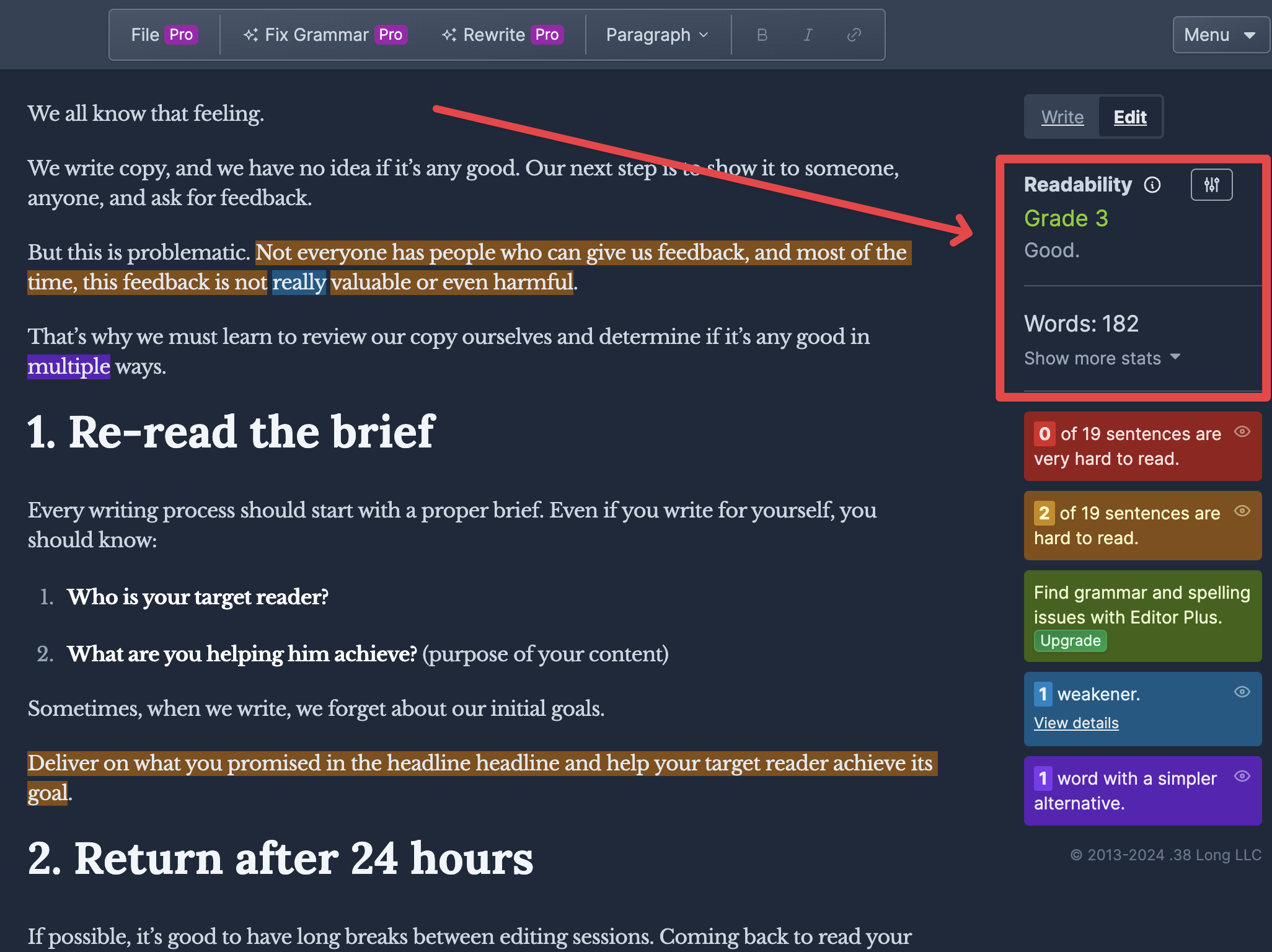
Hemingway app: Paste your copy there and make sure your readability grade level matches your target reader’s grade level.
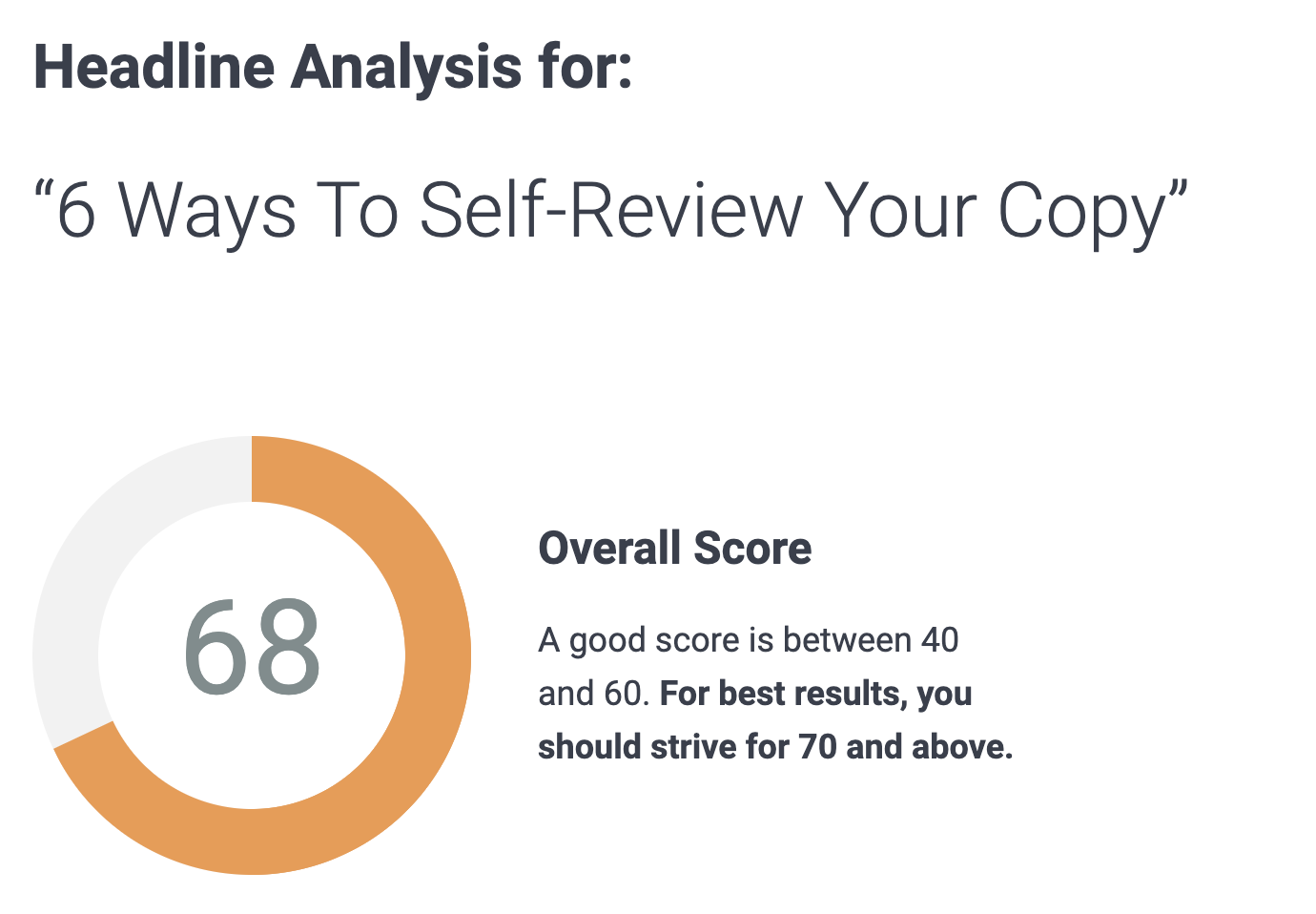
Headline analyzer: Get an idea of how good your headline is and how to improve it
4. Read aloud
“Write like you talk.”
If you read your copy aloud and find parts that are unnatural to say, it’s time to edit.
When speaking, you’ll quickly spot awkward phrasing and long sentences.
5. Become your target reader
Your friends can give you some good suggestions, but your target reader is the ultimate judge of your copy.
While finding this target reader is hard, you can use your imagination to become him.
Think about where he is right now, what he does, and what device he uses to see your content.
Now think: after reading your content, and given his specific situation, does the headline grab his attention? Is he likely to take action?
6. Review on your phone
Reviewing our copy on another screen helps us review different aspects of our copy, like formatting and visibility.
Is your copy cut short by the screen when you read it horizontally? Does the formatting of your email look unappealing on the Gmail app?
It’s also another way to get a fresh look at your copy (just like the 24-hour tip).
7. Test your copy
You should get your copy published and see how it performs. This is the ultimate review.
- If you wrote a website copy, look for the traffic numbers from Google Analytics.
- If you wrote a Facebook ad, track the CTR, engagement, or impressions.
- If you write for yourself, publish it on Twitter or Medium, and it gets attention.
- If possible, use A/B testing to try different variations of your copy. Numbers don’t lie, and what you don’t track won’t get improved.
Get your writing out there and see what the people like.
I know some of these steps seem difficult, but please don’t count on others to tell you if your copy is good.
Asking for specific feedback from knowledgeable people is great, but it’s hard to get on a regular basis.
You are better off learning the skill of self-reviewing.