
I found Slack’s homepages at every major funding milestone in their history.
Comparing the headlines. Mapping hero elements. Looking for patterns.
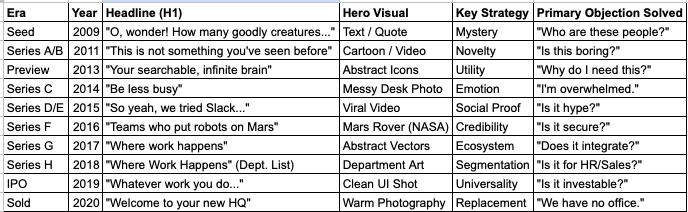
Here are the two unique strategies that I discovered.
Find out below how to apply them today to your own site.
Lesson #1: Each homepage version was a different weapon.
Slack raised $1.2 billion before showing a single screenshot of its product on its homepage.
For five years, they showed messy desks. NASA rovers. Abstract illustrations. Anything except the chat.
Why?
Because they used it to handle the objection of the market at that time. Not to show off their UI.
The website was a weapon, and they changed the messaging and the design to fit the battle.
Series C (2014) , “Be less busy”
Where are the seed, A, and B rounds, you ask?
Turns out Slack raised $15M before they were Slack. They started as “Glitch” - an online video game.
Anyway, it wasn’t slack yet, so I left it out.
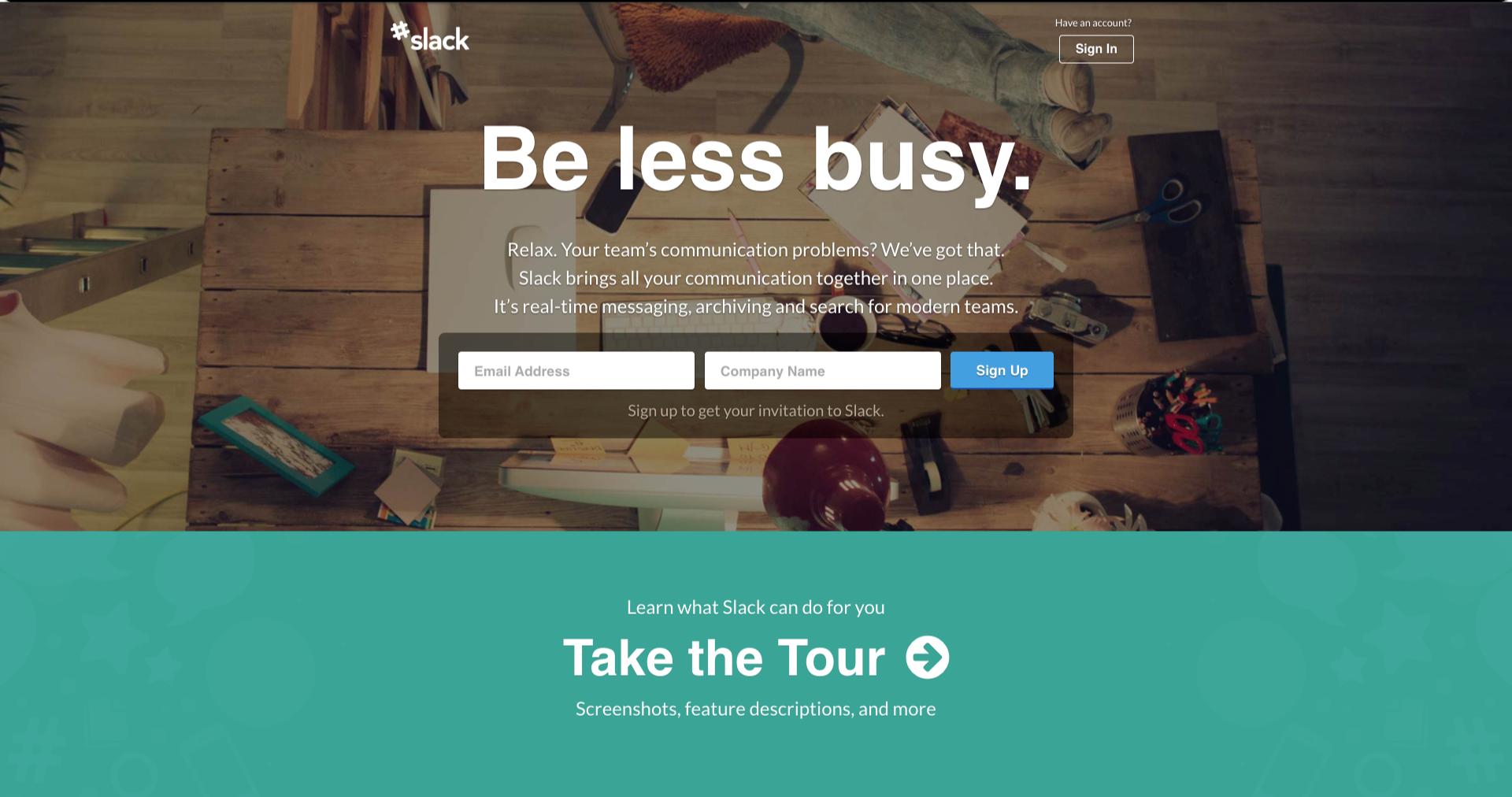
No product. Just a photo and a headline that sells the benefit (“relax”).
- The market’s objection: “I’m drowning in email.”
- Slack’s answer: “We get it.”
Series F (2016) , “Teams who put robots on Mars”
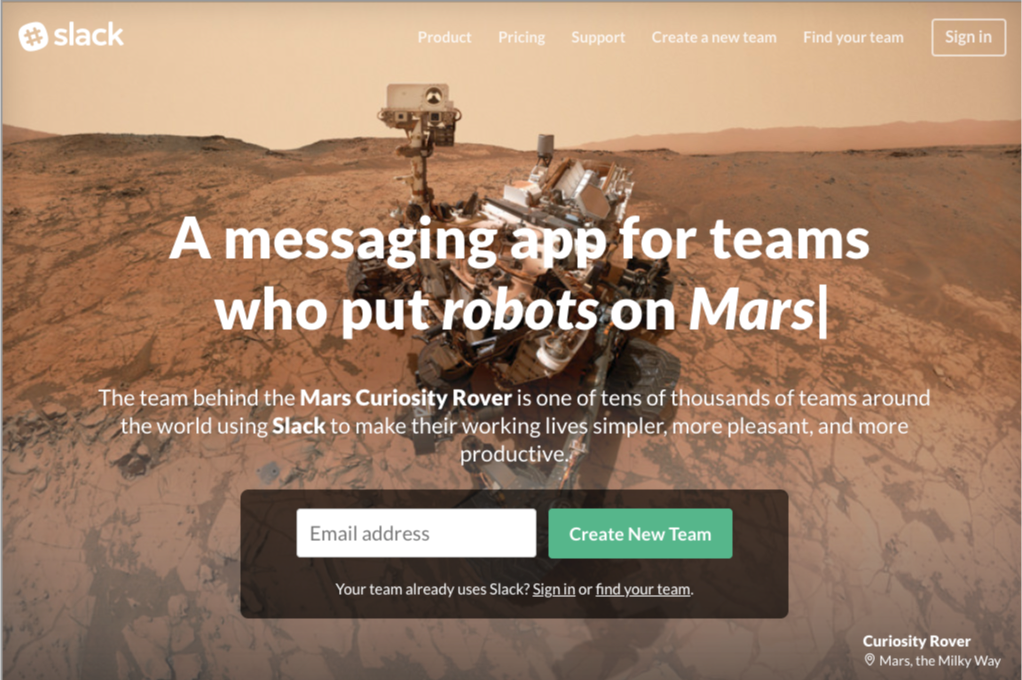
Still no product. A literal rocket science reference.
This was all about social proof and showing credibility.
- The market’s objection: “Is this secure enough for my company?”
- The hero’s answer: “NASA trusts us.”
Series G (2017) , “Where work happens”
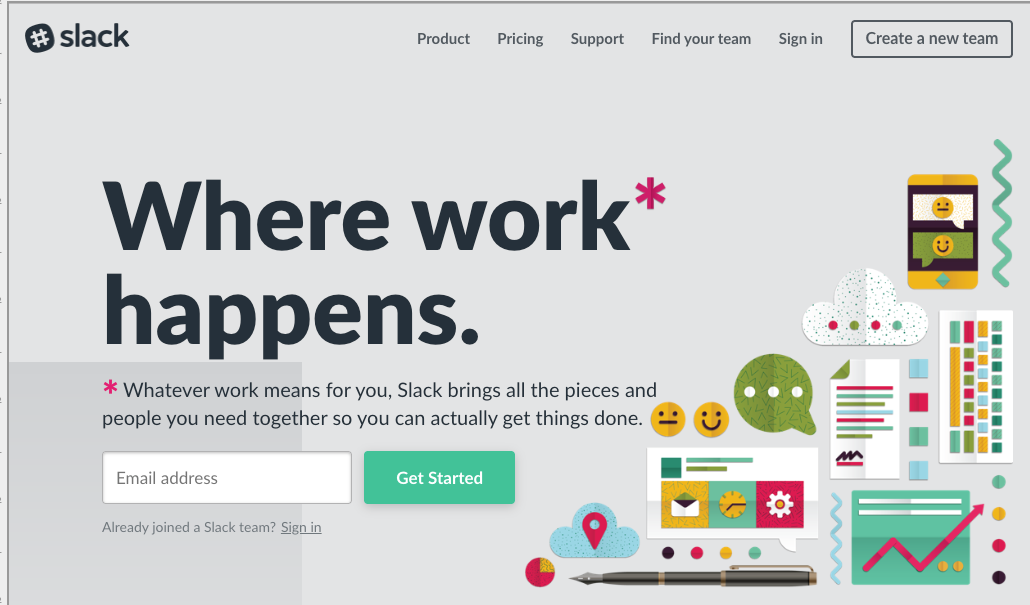
Still no product. Just shapes representing integrations.
- The market’s objection: “Does it connect to my existing tools?”
- The hero’s answer: “We’re the operating system.”
The pattern: Each hero image answered the specific fear of that growth stage. It didn’t show abstract visuals (like many startups do), and each element had a specific objective.
Stop treating your website as a brochure. It has a job to do: to help you sell.
Lesson #2: The headline evolution
While the visuals shifted, the headlines climbed a ladder:
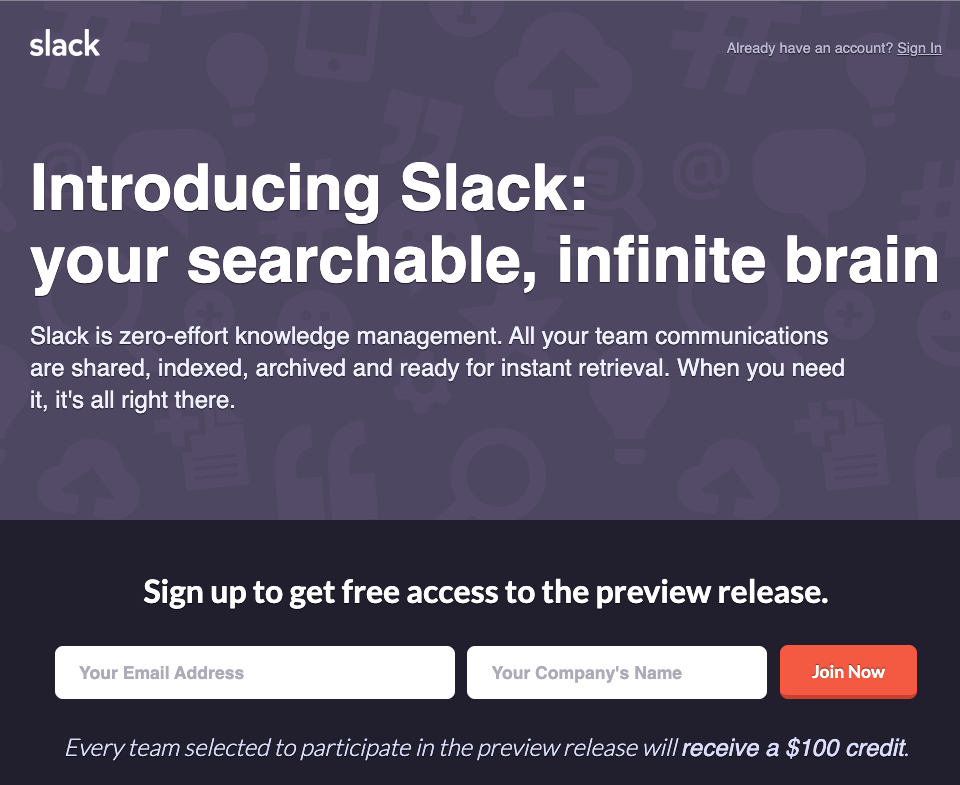
2013 (Launch): “Your searchable, infinite brain”. Feature - what it does.
2014 (Series C): “Be less busy” Benefit - what you get.
2017 (Series G): “Where work happens” Identity , the space you own.
This is the maturation arc:
- Features are copyable. Any competitor can say “searchable.”
- Benefits are memorable and you need them to sell and grow your base.
- Identity owns territory. “Where work happens” is a category.* You can only do that once people already know your product.*
Early stage: explain what you are. Growth stage: own a concept.
Finally showing the UI (IPO 2019)
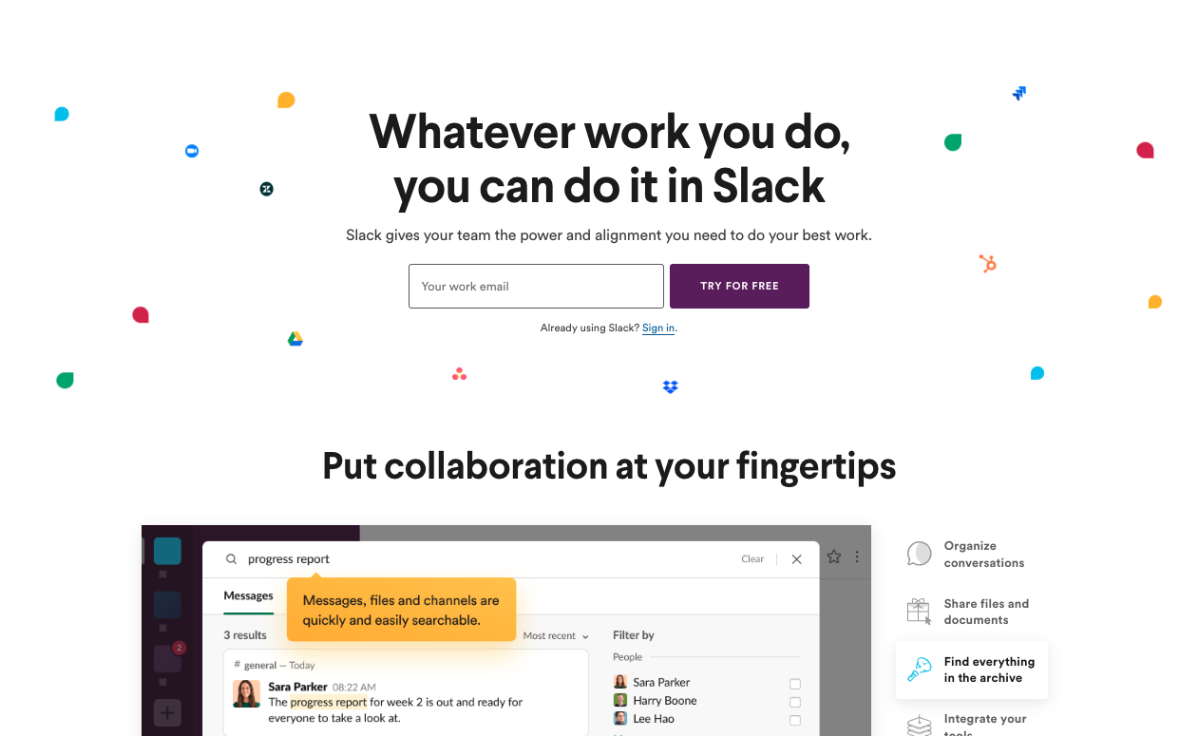
Why now?
By 2019, Slack WAS the category. Everyone knew what it looked like.
The interface had become the default mental image of workplace communication, so it made sense to just be clear and show the UI.
How to apply these lessons today
Two questions for your homepage on Monday:
1. What’s your market’s #1 objection right now?
What do your clients fear the most right now? Your hero should answer that.
2. Where are you on the headline ladder?
- If you’re at Pre-product/Seed:Your headline should → Explain what you** DO (Feature)**
- If you’re Post-traction: Your headline should → Explain what they** GET (Benefit)**
- If you’re a Category leader:Your headline should →Claim the** SPACE (Identity)**